
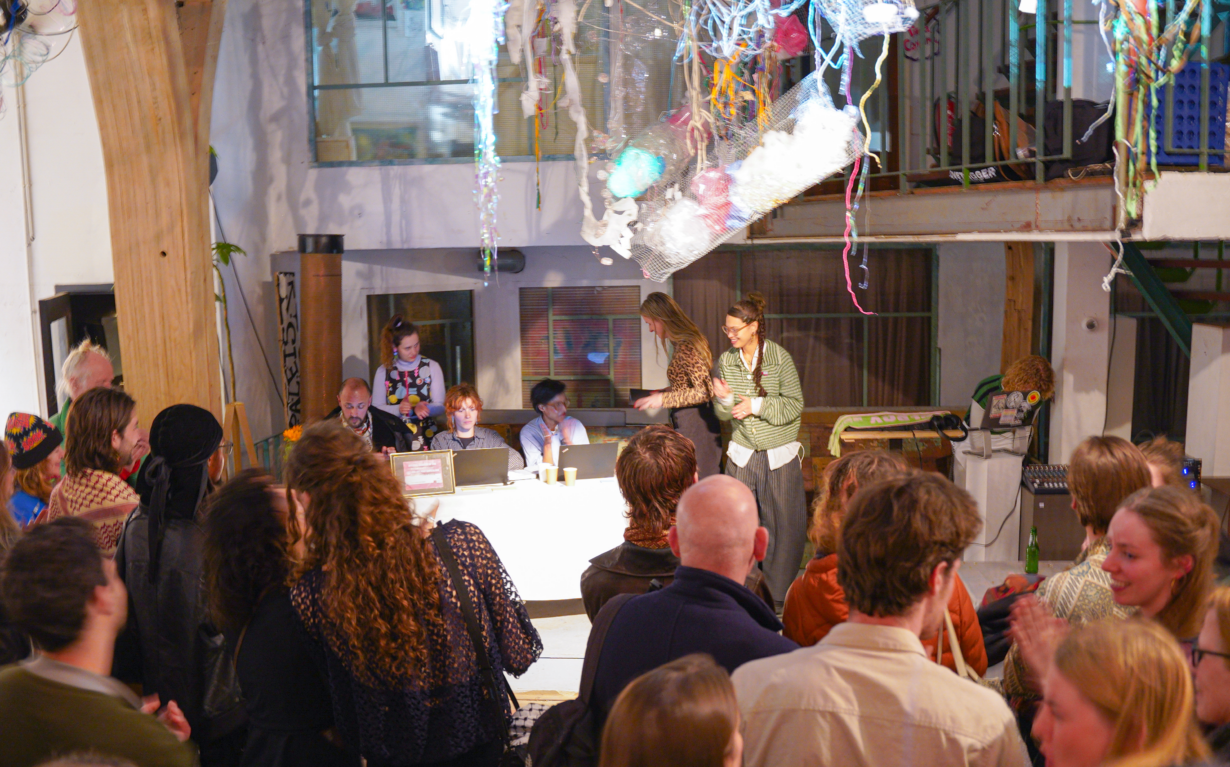
Life and Art Post Capitalism: dit waren de werken
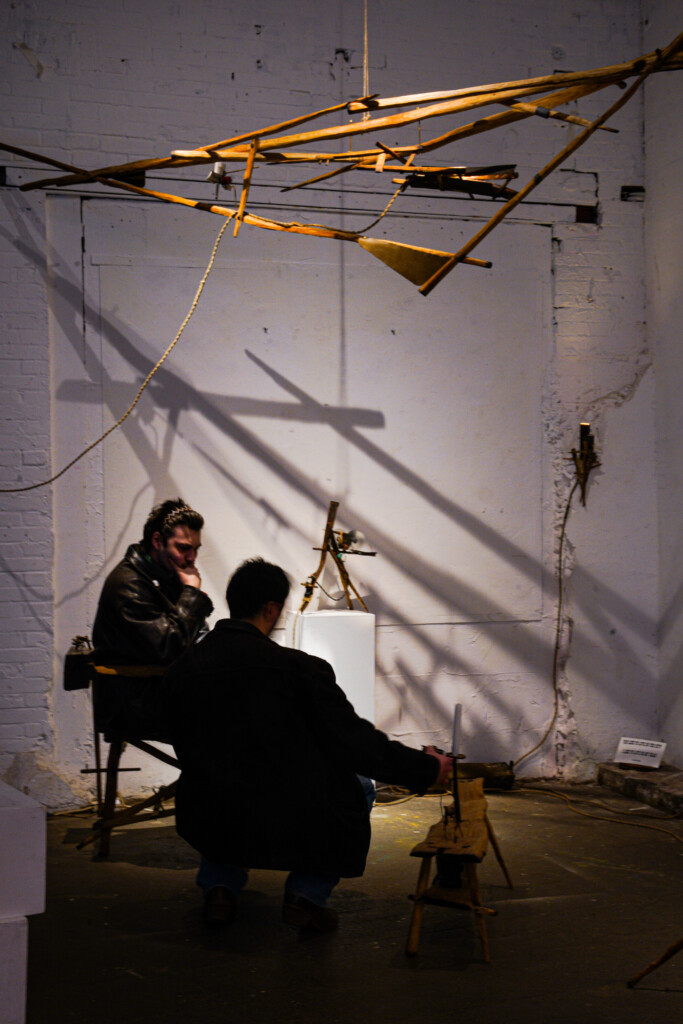
You Like to Live in the City, I Like to Live in My Head is a universe of sculptural furniture that gives form to the subconscious through craft. Each piece emerges intuitively in both function and aesthetic, expanding this growing world. I invite the viewer into a space drawn from my subconscious, an attempt to give physical form to thought and feeling. Through trial, error, and material exploration, making becomes a way of thinking and a search for a physical expression of the mind. The work embodies escapism, cultivating an aesthetic I feel is missing from everyday life. From the moment I could wield a knife, creation has been a way to understand myself and the world. This universe grows from that impulse, blending influences from culture, craft, and media. Working with traditional techniques and hand tools, I combine clay, timber, blacksmithing, electronics, and found materials. Reclaimed and recycled elements play an important role, grounding the work in ideas of sustainability while bringing traditional craft into a contemporary art and design context.
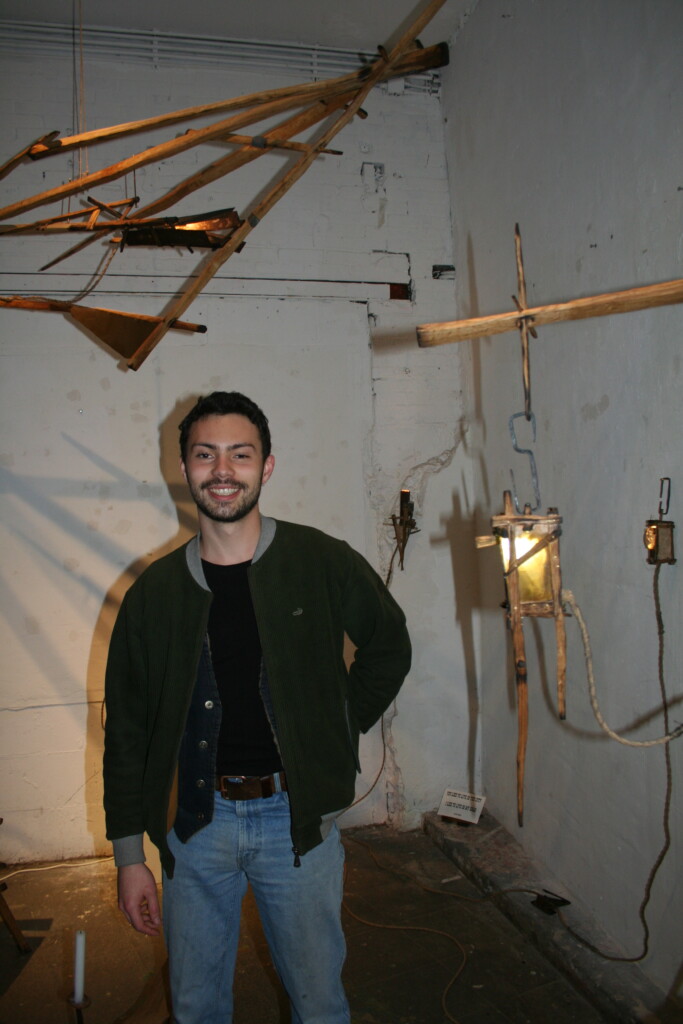
The practice of Abel Overdijk is a developing body of sculptural furniture that investigates craft as a means of materializing the subconscious. Each work is produced through intuitive processes in which function and form emerge through trial, error, and material exploration. Making is positioned as a method of thinking, using physical construction to articulate internal states and aesthetics that resist language.
Rooted in fundamental building processes and an embrace of imperfection as an expression of personality, the work combines clay, timber, blacksmithing, electronics, and found materials. He uses traditional techniques, hand tools, and recycled materials, bringing craft and sustainability into a contemporary art and design context.
Together, the pieces form a cohesive and immersive environment. Individually, they operate as standalone objects while simultaneously functioning as extensions of a larger, mind-shaped universe.
@abeloverdijk
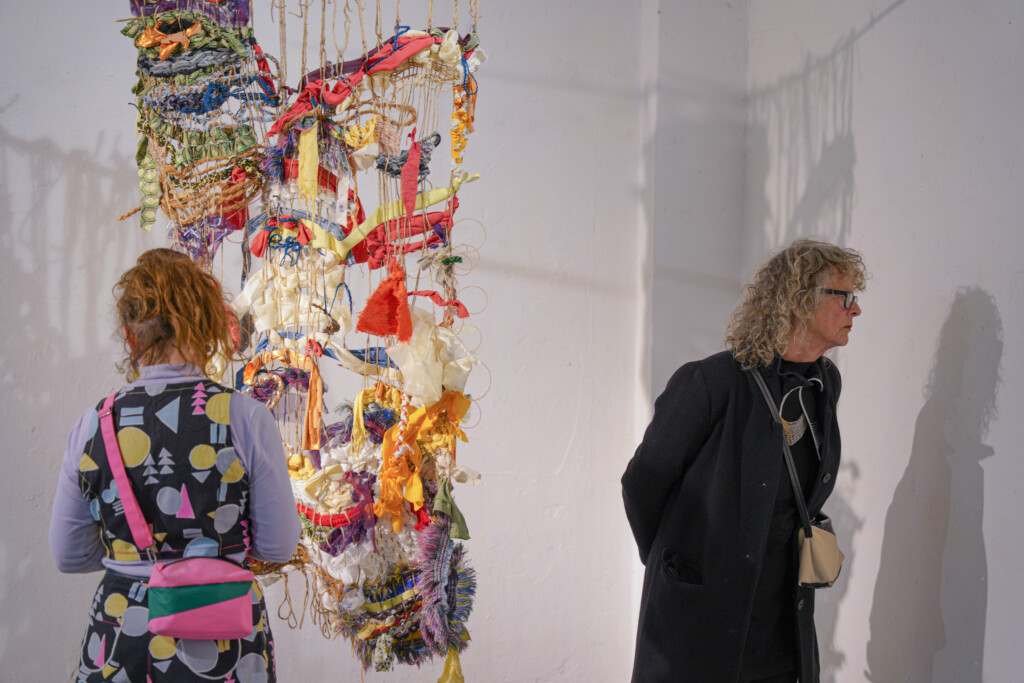
Assemblages of generational literacies are shaped by forms of (an)archiving, gesturing towards a future of reparative justice and care for one another. I dive into the importance of ancestral literacies by looking into gaps of daily and shared experiences, and bringing them to the surface while merging Javanese practice, such as the ‘Kejawen’ belief that centers on reciprocal relationships between physical and spiritual entities on ancestral lands. Hoping to connect with the spiritual realm, and communicate with our ancestors and encounters with other non-human entities to celebrate the abundance of life.
Textiles have been a recurring medium in my practice, as they hold a plethora of stories, those that are not communicated outwardly but become an embodied layer where one’s physical self intertwines with the outer world. This nuance of corporeal gestures is embedded within textiles, rooted back to textile production and methods of repairing clothes, representing a form of transformation where we centralize unvoiced histories and circular processes. Process of weaving knowledge, skills, and stories planted on fabric, this collective tapestry represents emergent strategies of solidarity, sharing multiple common threads of reciprocity and interconnectedness between living entities to counteract current modes of violence embedded within society from the past.
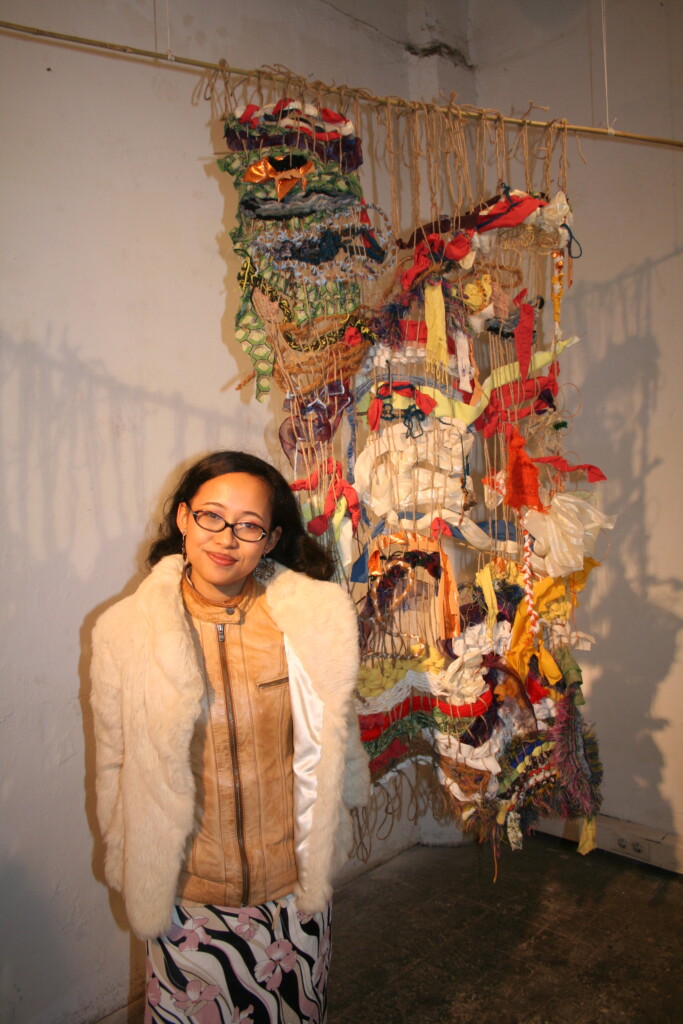
Asha Victoria is an Indonesian interdisciplinary artist and graphic designer based in Arnhem, the Netherlands, where her work combines digital and analog methods, including film, textile design, and printed matter, to create tactile, collaborative experiences grounded in cultural memory. Her practice focuses on storytelling, community building, and material research, often involving natural materials and non-human entities as collaborators. Inspired by Indonesian practices like ‘Lumbung’ and ‘Gotong Royong’, she explores regenerative, circular ways of making, emphasizing slow processes, cultural memory, and the voices of non-human kin. Asha imagines a more compassionate relationship between living bodies and land through collaboration, craft, and shared narratives.
ashavictoria.cargo.site
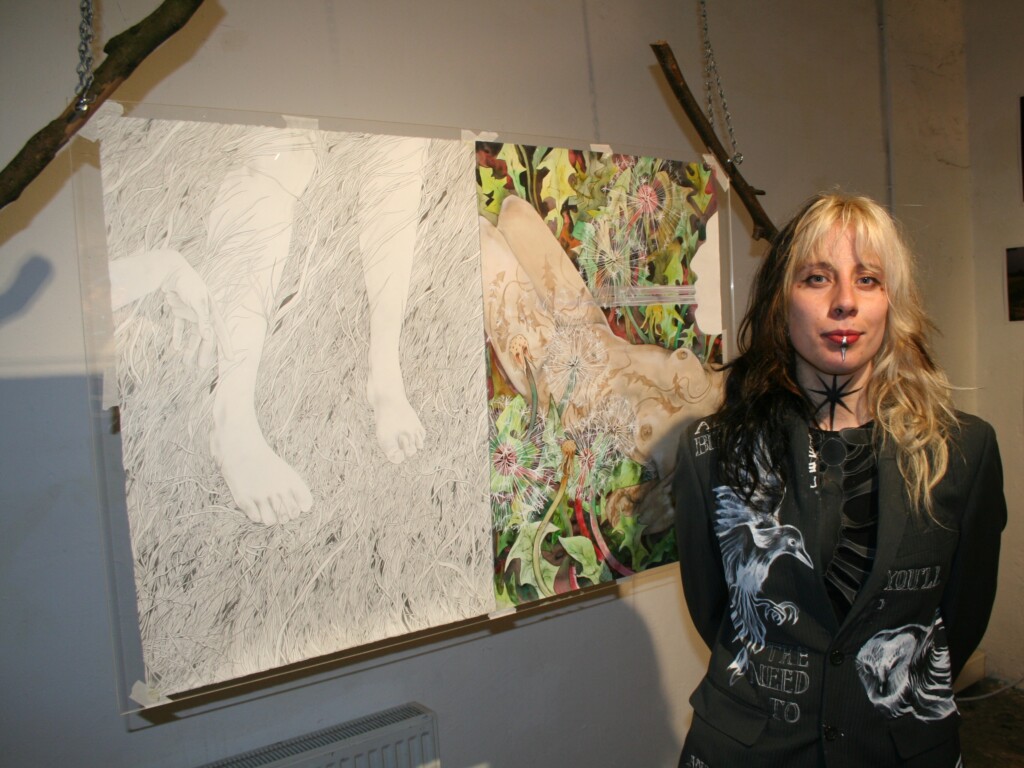 When we have depleted earth with our machines and are done looking at our blue screens. When we finally release our chokehold on earth; would she really take us back? Let us sink back into the soil? Wrap her leaves, branches, waves and roots around us in a welcoming embrace? I wouldn’t, but knowing nature, she would.
Bobbi is an organizer first and an artist second. Her lived experiences and involvement in urban environmental and social movements in the Netherlands fuel an ever-growing need to make for and with the city: to reclaim space and to seek out stories, hopes and dreams that don’t naturally surface; that need untangling, probing and beckoning. This happens in her personal art practice, in her institutional research, and in volunteering and organizing throughout the city. She focusses on making (political) publications, activist tools and public art based on (participatory) research. In these projects she puts emphasis on radical imaginations. She strongly believes that even minor change can only become real if we are all outrageously imagining ahead.
www.anonniks.com
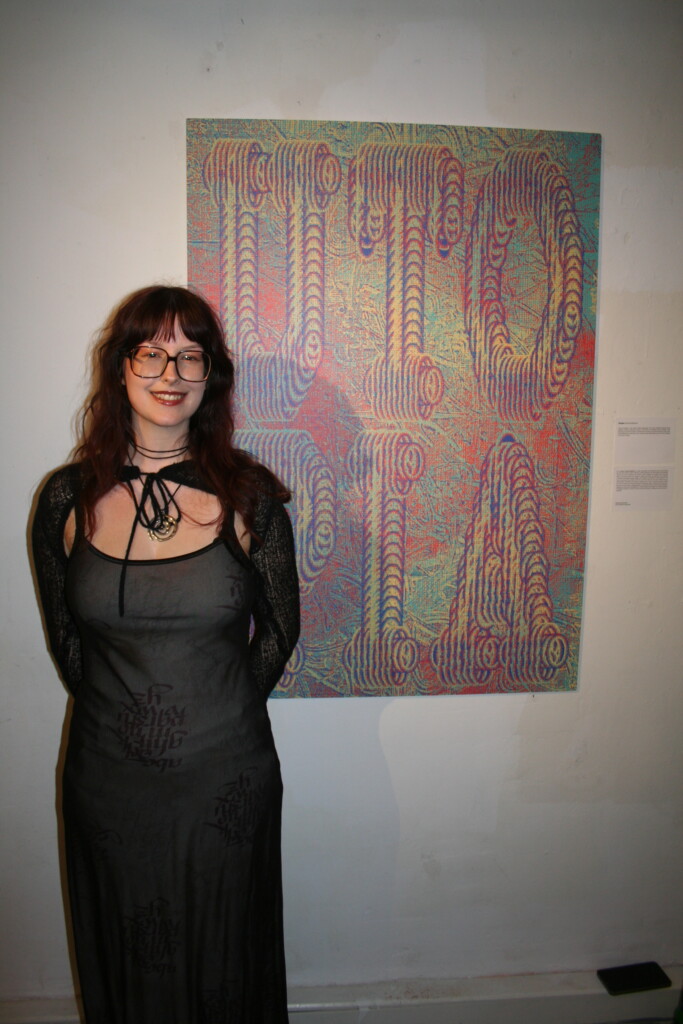
Utopia visualises a new civility through typography. The circles represent people coming together, working collectively toward a new world. The blending colors symbolise unity, dissolving boundaries between individuals and forming a shared, harmonious whole, while still representing as each their own. The pixel cubes representing how the future is shaped in this day and age.
As a designer, Emma Eickhout is mostly fascinated and interested by the world around her. Her work mostly consist of themes currently playing in the world directly and indirectly around her, such as political and systemic issues. Besides, she develops work that feels close to her inner world. She is eager to explore and refine her passions and contribute to societal challenges through design. She considers it important to involve others in her work and process and directly ask them what their ideas are and give herself room for improvement. Sometimes the process matters just as much as the final artwork. Letting go of some control can bring unexpected and inspiring results, making the journey just as important as the outcome. Helping people is a core value of Emma, and she is committed to reflecting on and further developing her understanding of how design can address societal challenges. She likes to use lots of colors and inspire others to change the world, directly or indirectly.
@buiitenaardswezen
emma.eickhout.cargo.site
Toggle Inhoud
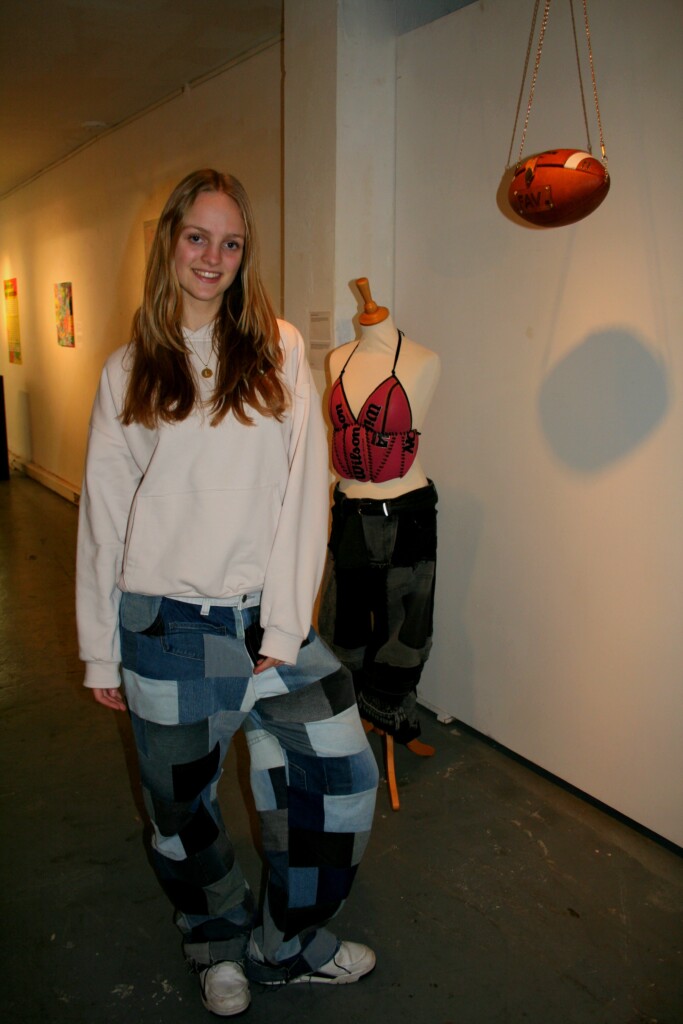
This outfit shows that old basketballs, trackpants, tablecloths and fabic samples deserve a second chance. The outfit is part of Sports Unite, Feline’s latest collection, which was inspired by the extra Family that Feline found in her basketbal team. For the collection Feline used old sports jerseys, basketballs, bike tires and jeans.
Feline Mulder (2010) is a sustainable fashion designer. She started designing and making fashion when she was 10. Feline only uses pre loved materials: she likes fashion but does not like the impact of fast fashion on the planet. She is very creative in her material choices and likes to experiment and try new techniques. Feline finds her inspiration in street culture, basketbal (her other hobby) and the materials that she finds.
@felines.favorites
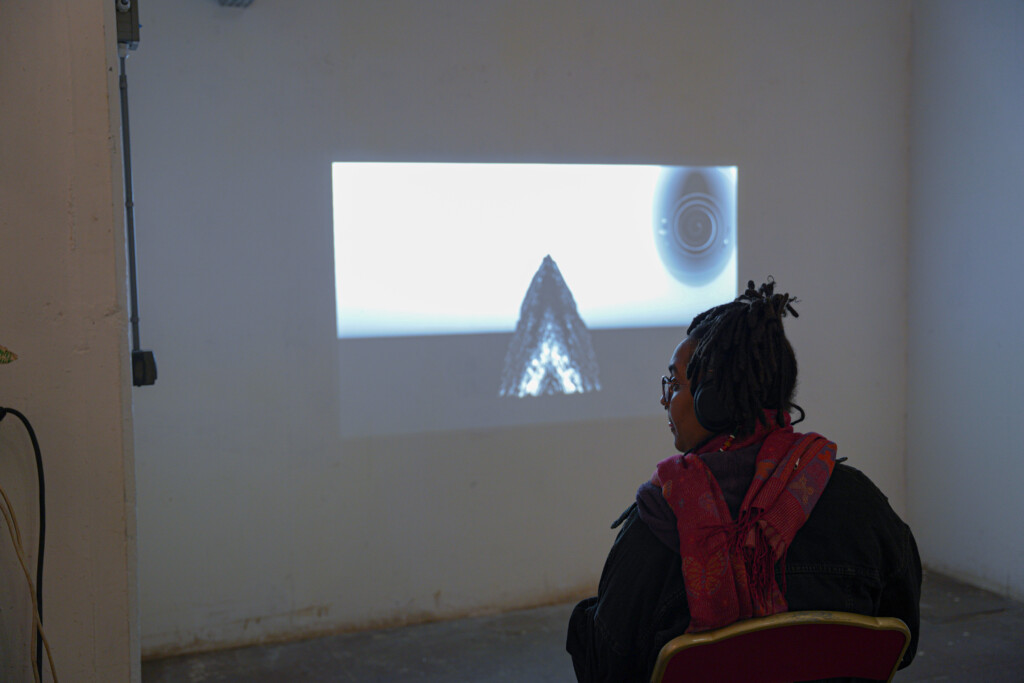
‘’But I know of a place far worse yet better’ is exploring the world of the subconscious mind through a speculative approach. The world is created with full of ambiguities and contradictions. Neither architectural nor organic, neither ocean nor land, neither space nor earth, neither just mental nor physical. or maybe it’s all above. This work serves as an invitation to escape from the world you reside in and transcend into a transformative surreal world of the mystifying mind.
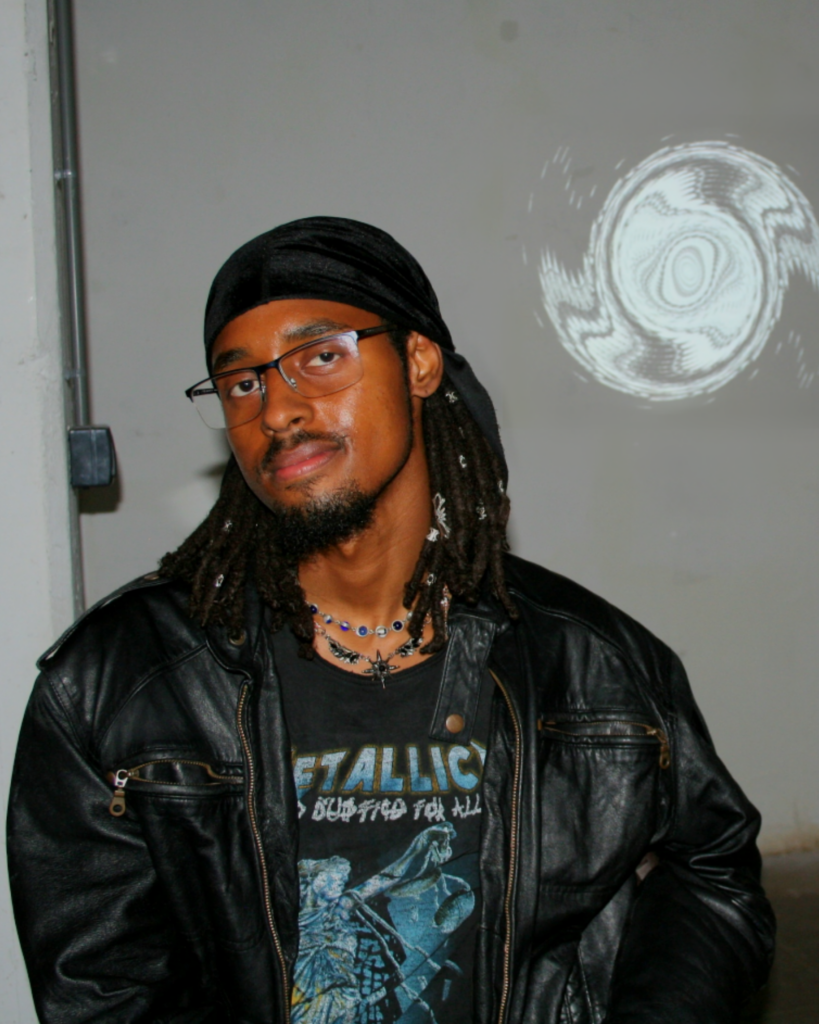
Keson Riley is a multidisciplinary artist from Curaçao, interested in the escaping of the world we reside in. He explores this in his artistic practice through the subconscious practice of surrealism and world-making.
He grapples this by working hand in hand with intuition and material. Inevitably being open to whatever wish to manifest itself through material, creating a openness and freedom throughout the process. This process often starts with drawings created with Charcoal, fine liners and pencils. Keson’s particular way of drawing allows repetitive forms and varying textures to be created and sees elements of the drawings as possibilities for visual or physical translation. This stance allows him to create space for his work to prosper further into a combination of drawings, Instillations, sculptures, videos, collages performance and music.
@saint.stygian
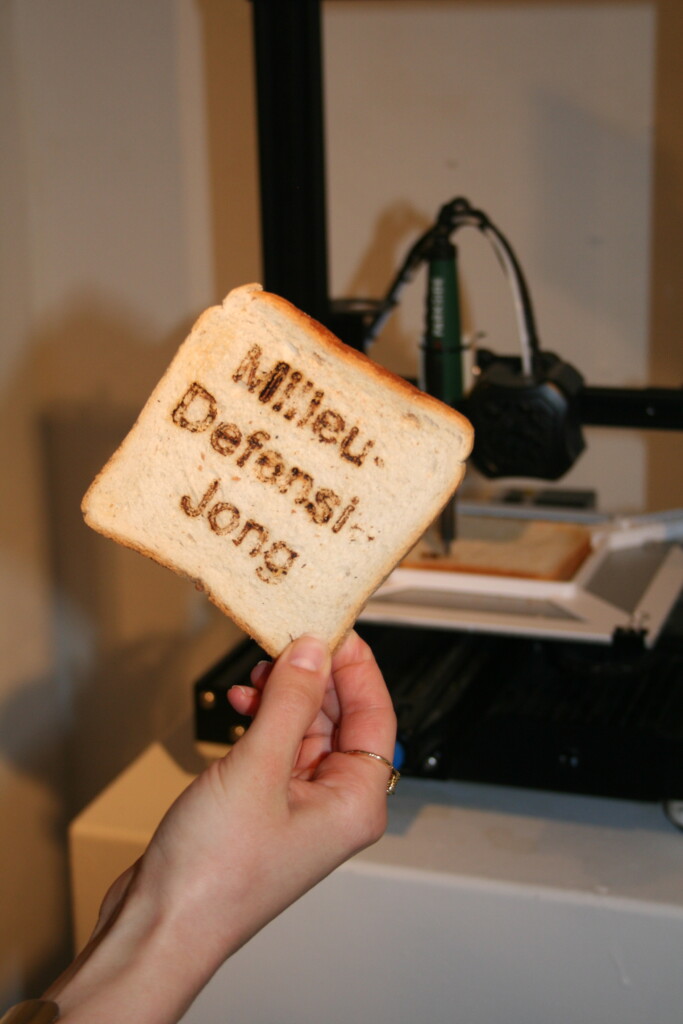
How much control do you still have over your online conversations? Big Tech companies are gaining more and more power over our online communication. The Toaster Printer offers a playful alternative. You burn your message onto the toast, read it, eat it, and the evidence is gone. What would you put on your toast?
Bread has served a role in alternative communication before. In World War II, bakers and bakeries formed an important network: maps were hidden inside hollowed-out loaves, and secret messages were carved into the crusts.
What do the expressions people share on toast tell us about our communication needs? How can the existence and experience of an alternative, like a toast printer, support the collective, creative reimagination of our communication practices?
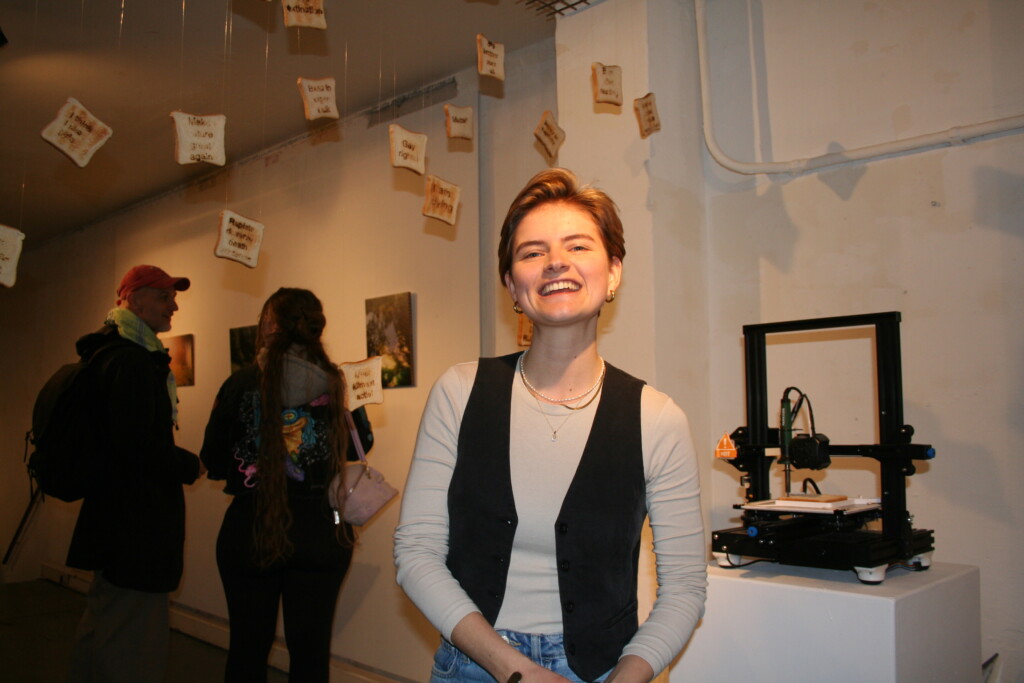
Kiki Meiland recently graduated from the Master Industrial Design at Eindhoven University of Technology. Her work focuses on complex societal challenges that call for collective imaginative efforts. In her speculative yet experiential designs, she balances ridicule and provocation with relatability and realism to engage and inspire people. Ultimately, she aims to facilitate collaboration around the design to initiate systemic change.
Are you interested in such a session?
To foster discussion, collaboration, expression, and collective (re)imagination
or simply to have a fun and tasty experience.
Feel free to reach out to discuss the possibilities.
@kikimeilanddesign
kikimeiland@hotmail.com
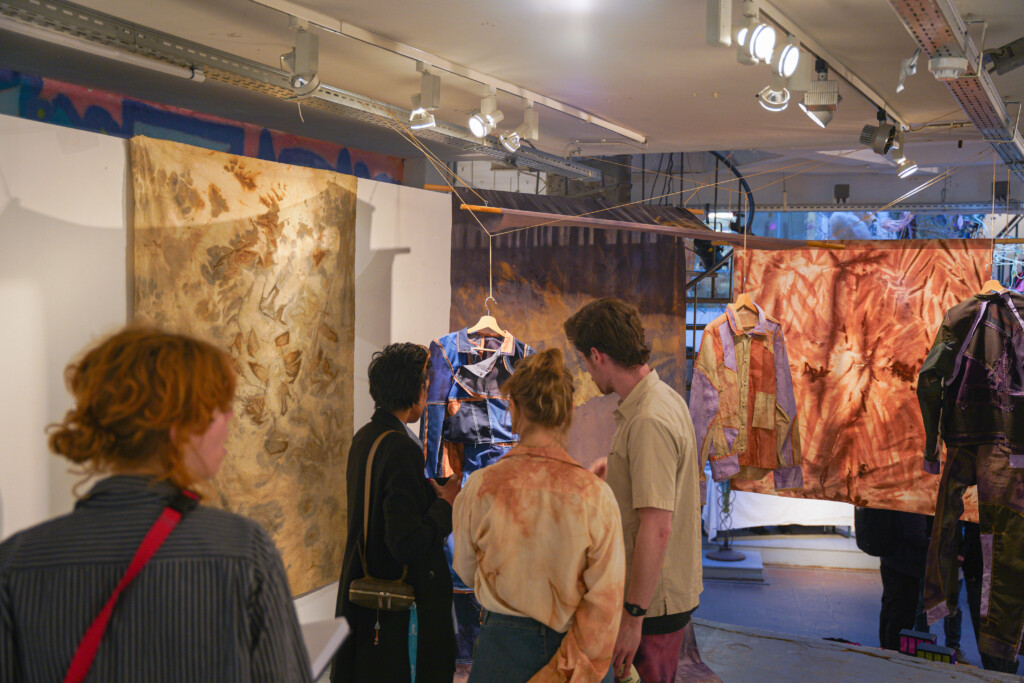
The next six generations can live off the clothes we have now. We want to give clothes that have lived, a new layer, a new context. We are taking them apart, looking for details of the previous life, unevenness of the fabrics, ripped seams and discolored patches. With that in mind we re-dyeing them with natural pigments and recontextualising them into new clothing to let them live their next life.
We work with old factory and army clothing because of the uniformity and history of these
garments. By taking them apart, we break through this uniformity and give them a new identity with an eye for the wear and tear, visible through the old traces of use. A coat can become trousers, and trousers can become a coat. In this way, we play with all the existing details and place them in a new context.
To apply more depth into clothing we use natural pigments to redye them. The process of natural dyeing is slow practice and add an unexpectedness, which we use to play around with by recontextualising the clothing. We are working with a self developed drying technique, which you can also see in the cloths hanging around the clothing.
Our project is a vision of the future in which clothing is not seen as a one-dimensional object but something that can live off and change with the wearer.
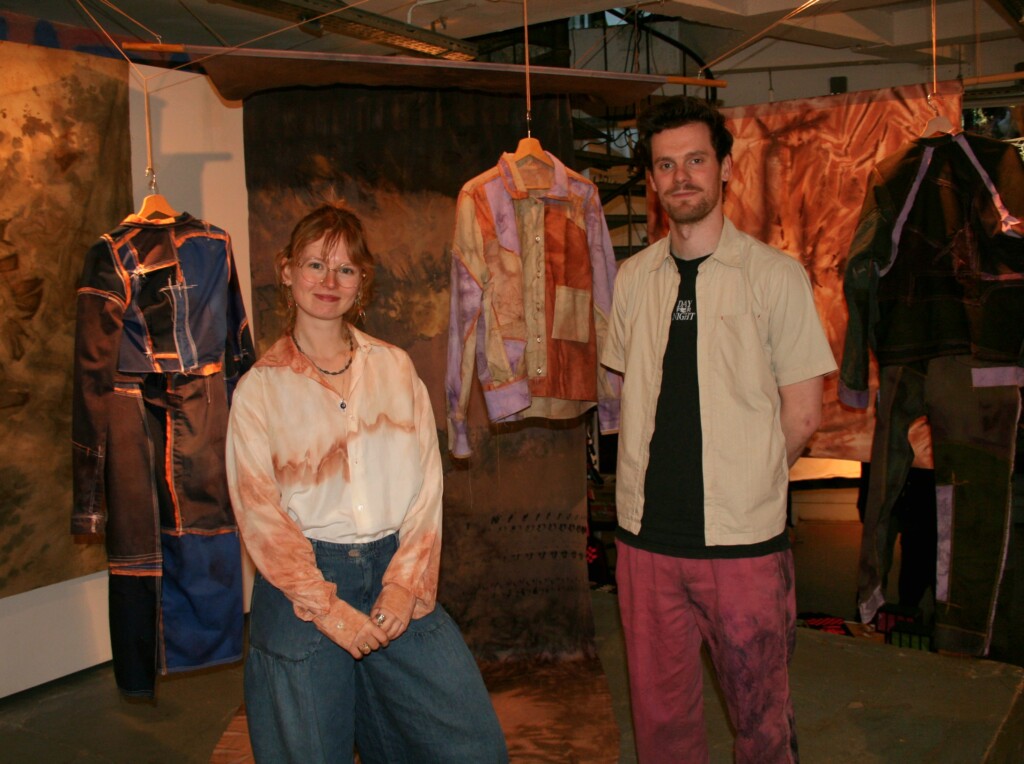
Lise van den Bos is a natural dye & textile artist, based in Utrecht. As an artist, she works from her own garden and studio, where she grows dye plants and does research into natural pigments. She creates textile artworks in which natural colour is both the material and the subject. The endless possibilities of natural pigments keep her curious about the dye bath and the colours it creates. This artisanal process teaches Lise to be patient and embrace imperfection. She believes that nowadays we push ourselves too hard when it would be better to stand still so we can learn from the rhythm of nature and follow it to create together.
Joris Overmars is a creative that works with found objects, that could be clothing, fabric, or graphics. Like a collage, he tries to find ways to put them together. The process is always visible and for Joris, it is the main part of a project, not the end result. He responds to found objects in a way that seems logical to him, as he dissasembles and reassembles. He looks for contrast or similarity between parts. His main inspiration is music, in the way music has different layers which also could be a kind of audio collage. In music, people work with samples for other types of music or sound, and stretch and warp these, sometimes to almost abstraction. This is something Joris likes to do aswell, and the art for him is in trying to still keep the recognizability of an asset while putting it in a entire different context.
For this project, Joris and Lise worked together because they consider their making processes similar: they both work intuitively, with a caring eye for materials and sustainable processes.
@jovermars.97 @lise.vandenbos
Sometimes I cannot breath
a huge wave of material is burying me
then I feel like I can flow with the wave
take up space
create worlds
with beautiful people around me
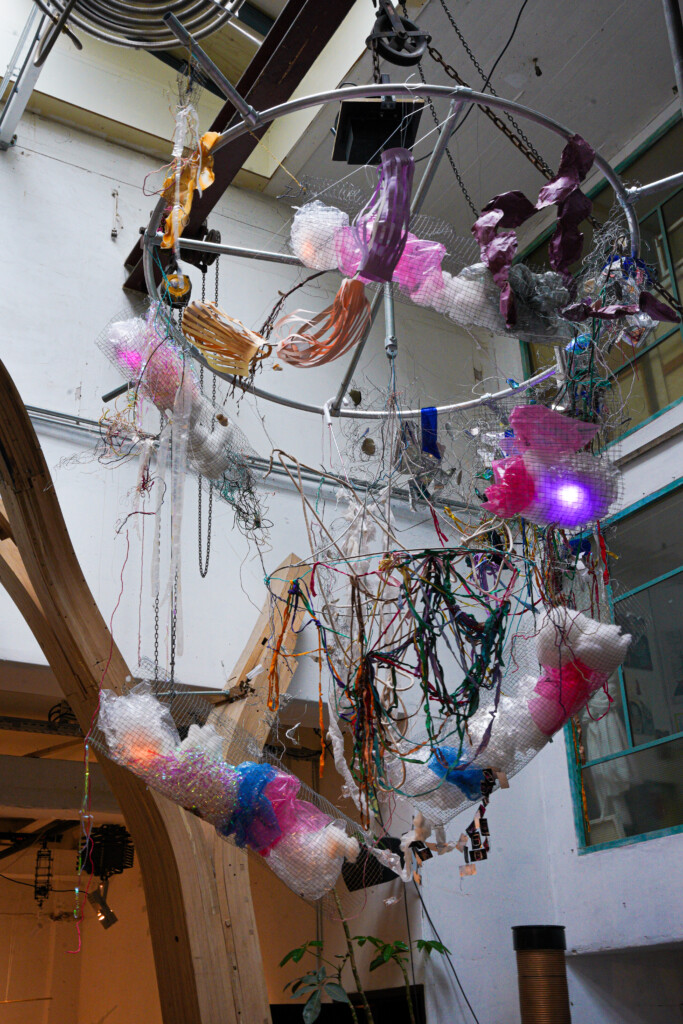
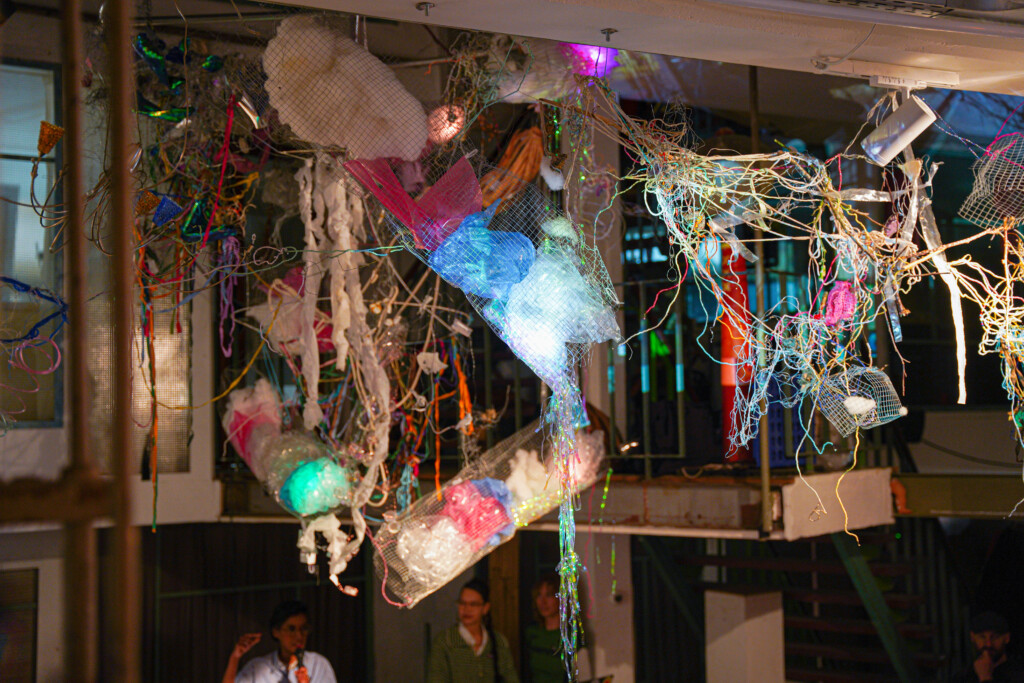
The world overflows with material. I want to work with what exists already and reduce commercial aspects in my artistic practice as much as possible. How we treat material and what kind of material we use is a crucial part of the message we transport. I like to work with material that has gone through different stages of being (found objects, broken objects, “trash”) that I transform through artistic intervention and that constantly change through natural processes (melting ice, steam, shadows). I see beauty in all these abandoned materials, but I also feel the burden of this overflow, how many objects am I able to care for and for how long? I struggle and then I feel joyful again, carrying makes me feel the weight, I see the materials float as a hanging installation, light and shadows playing with it.
For this installation, my materials travelled with me 65km on a cargo bike from The Hague to Amsterdam. Materials I encountered on the streets were joining in the journey and are now part of my ongoing physical archive. I could only manage so with my dear friends’ help. Also, I asked visitors of the exhibition to bring their trash from home, materials coming together, taking up space, creating worlds.
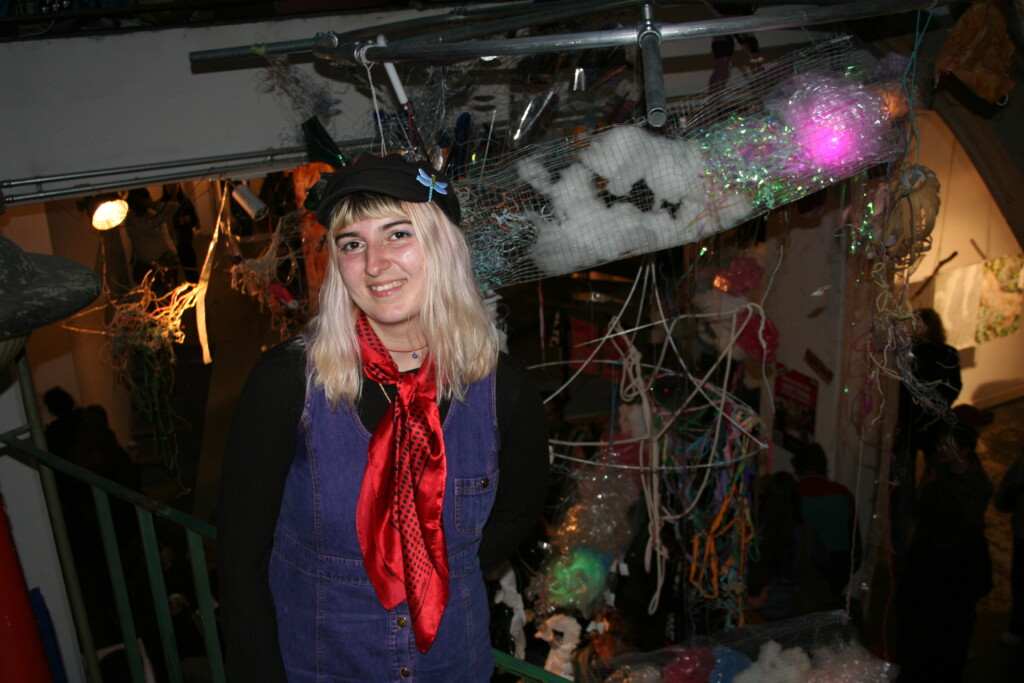
Marie Lou merges drawing, installation and performance. ML is an object poet, seeing value and beauty where society has abandoned material. Collecting, caring, artistically intervening with it and arranging the material as an endless performative practice in a physical archive. An everchanging site-specific installation artwork that completely changes the space, expanding it and opening it up, inviting to playfully rethink. A huge network of mainly found or gifted materials, the construction holds itself by having tension points at several spots. A non-hierarchical collaboration where every part is equally important to hold the whole together.
Love and Power
Marie Lou
@marielou.honert
marielouhonert@googlemail.com
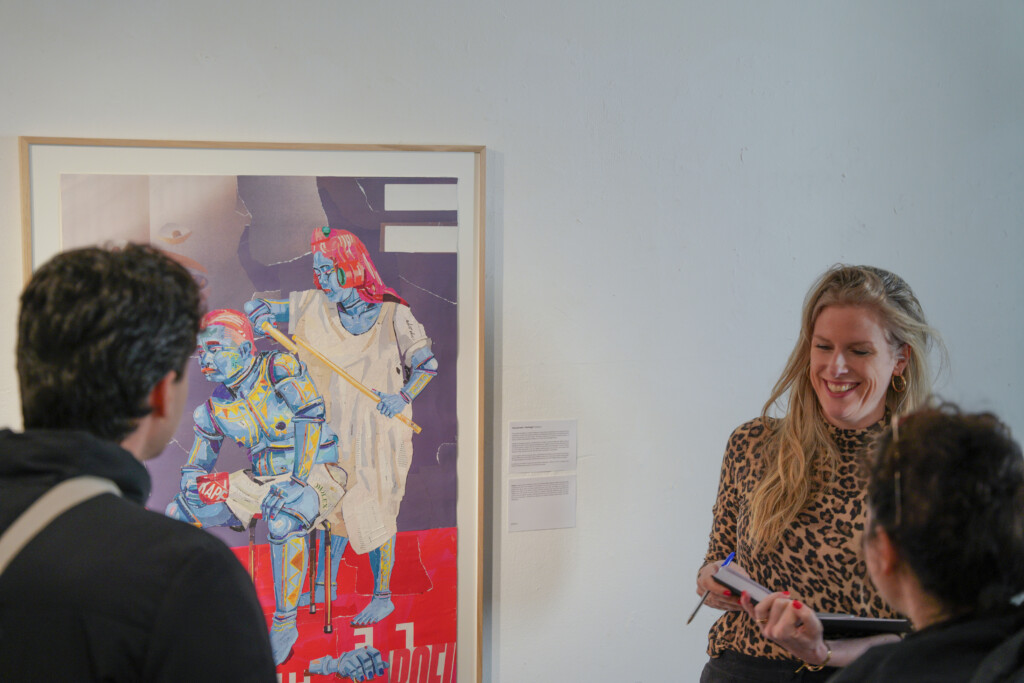
Panulundon imagines a modern Philippines untouched by colonization and existing beyond capitalism. In this world, a person’s worth is not defined by wealth, status, or material success, but by love, family, and community. The scene captures an intimate moment between a father, mother, and daughter, centered on a quiet yet meaningful ritual.
Instead of pursuing external achievement, the father receives traditional Filipino tattoos applied by his wife. The ink is gold, symbolizing honor, dignity, and true value. Here, gold does not signify power or wealth, but the richness of care, trust, and belonging. These markings are not merely decorative—they are deeply personal, given by someone who knows and loves him most, transforming the act into one of connection and identity.
Their daughter, still too young to tattoo, participates by holding a brush dipped in gold and gently writing “po” on her father’s leg. In Filipino culture, “po” expresses respect and humility. Through this gesture, she learns that love and reverence are the highest forms of wealth.
By allowing his family to mark him, the father embodies a different kind of success—one rooted in relationship, presence, and shared meaning.
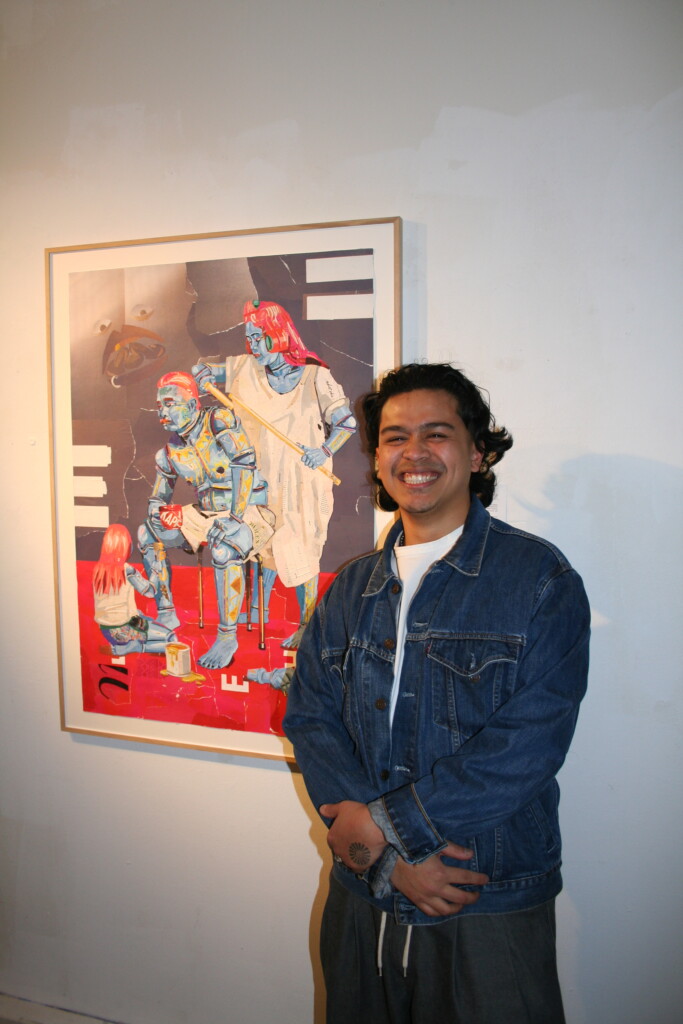
Maqruz creates hand-cut paper mosaics and mixed media collages using torn and precisely cut fragments from old magazines and posters. His process is slow and intentional— he builds each figure piece by piece, balancing clean cuts with raw edges to shape form, texture, and detail. He is drawn to these materials because they carry past lives, which he reworks into new stories. His work centers on figures, blending childhood, play, and pop culture with his Filipino heritage. Through layering and reconstruction, he explore identity, care, and connection, showing how people are shaped through relationships and lived experience.
@maqruz_
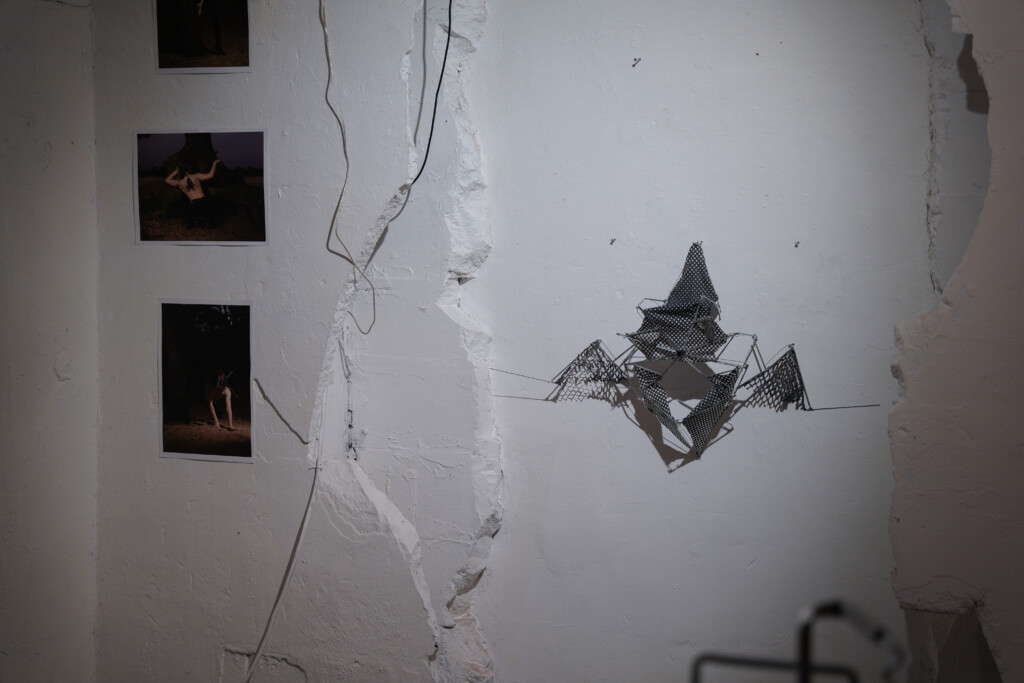
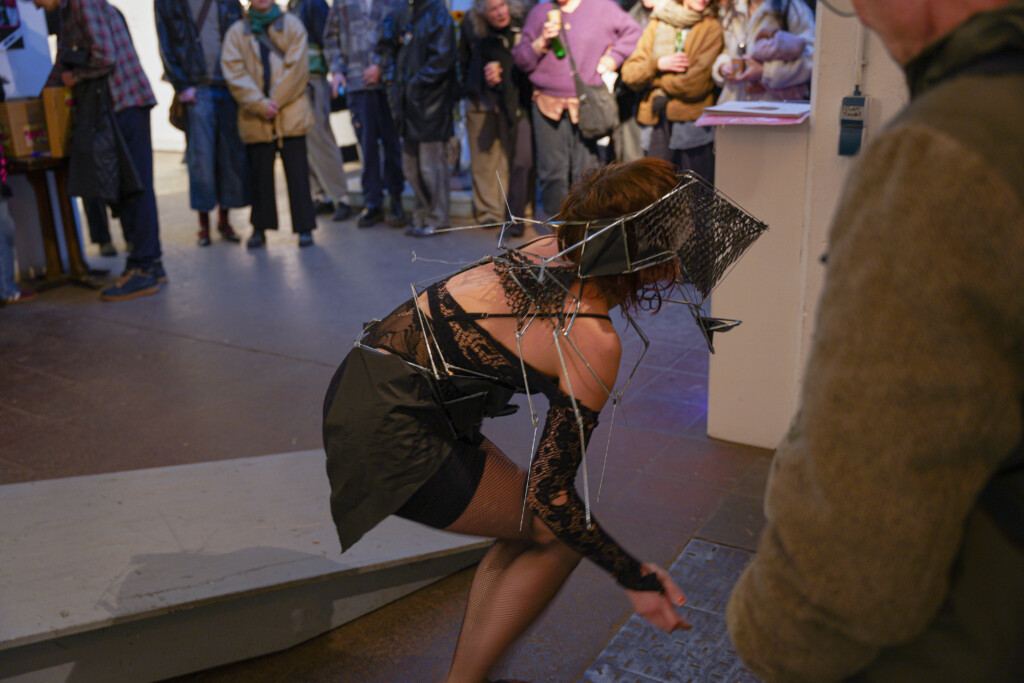
A barren landscape reveals the aftermath of late-capitalism: abandoned factories, stationary trucks and kilometers of concrete lay empty. Underneath the ruins of an old umbrella factory, with the clicking and crunching of its ligaments, a creature crawls out. Busy in its day-to-day occupation, it’s collecting materials from under the rubble. Old pipes, big wheels, cables, screws, rocks, chips, everything being carefully inspected before carrying it along.
Upon closer inspection, the creature itself is armoured in something recognisable. It must be old umbrellas! The frame and wings forming an exoskeleton, protecting it from dangerous sharp edges and falling rubble.
Following this fascinating creature to its home-base, finding there an incredible amount of activity and cooperation. Thousands, if not more, of its kind crawling and clicking about. Moving materials from one place to another, glimpses of its past sometimes become visible in the remains. Everything is handled with care and given a new destination.
They’re building new life from it. Just like the exoskeleton of the umbrella-creature, some things become a protective layer or dwellings for the creatures to rest in. Other materials are broken down further, sometimes to the point of it not resembling anything anymore, just matter.
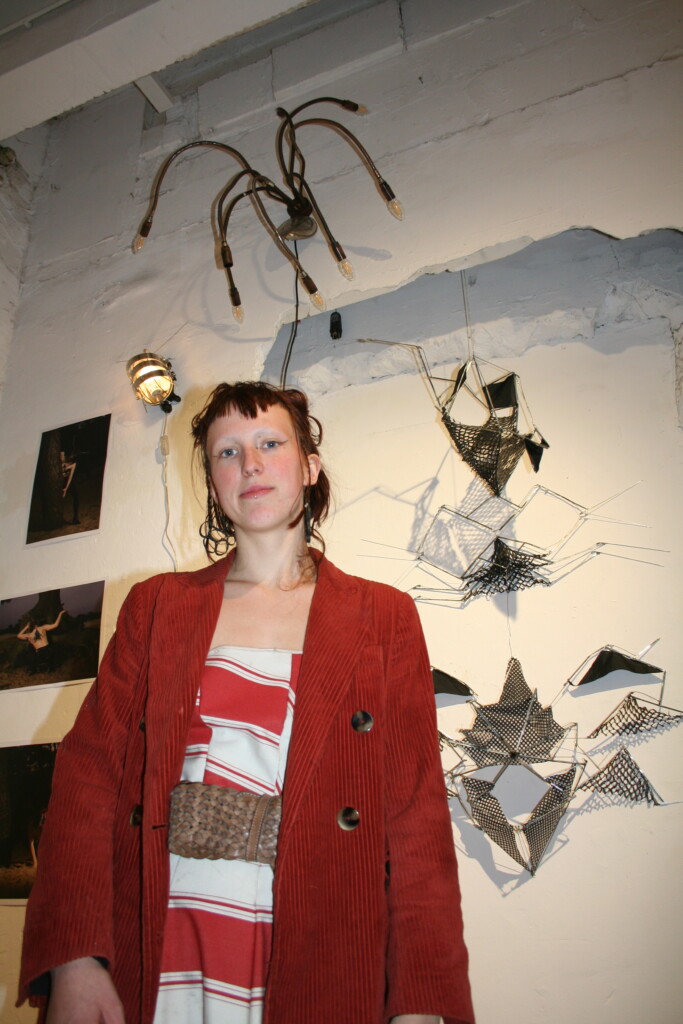
As a fashion student Mees Muijs discovered the polluting and exploiting truth about the fashion industry, making her realise that she doesn’t want to be part of this fashion world. When she does, she wants to use her creativity for a good cause. So she started creating designs, sculptures and performances envisioning the possibilities for another future.
A world where humans have learned from insects in their way of thinking of materialism. Questioning the Dutch work-ethic in which results outweigh the importance of health. Looking at trees for inspiration for endurance and strength, to enforce the way we as humans protest.
By using materials others value as waste, she challenges the value of materials. Where is the threshold drawn for ‘valuable’ and ‘trash? That thought is also central to “Urban Insects”. Besides that, she uses bio-materials and bio-mimicry, working together with – and being inspired by – non-human intelligence, to help the human world reform its (eco)-systems.
Through this practice, she hopes to add value and values to this world, without leaving the earth more burdens to carry.
@meezemuijs
 This piece imagines a world beyond capitalism. A world where life is not built around profit, pressure and constant survival but around community, sharing, curiosity, and care for everything. In this piece I wanted to show what society could look like if we were actually focused on providing for one another, eating together, living together, building something collective instead of competitive.
For me a world like that would not only be more just and true to what the world should and could be, it would also be more advanced both technologically, medically and spiritually. I believe that if humanity was not so consumed by money, power, and systems of inequality we would already be so much further in the way we live, think, and explore. We would have more space for discovery, imagination, and even contact with other life forms and galaxies or dimensions beyond our own. Maybe with the help of other creatures even…We would be closer to discovering so much more about what life has to offer and what we all are truly capable off.
This work is about that possibility. It is about a different kind of future for us all. One shaped by togetherness, openness, and wonder instead of capitalism and profit margins.
Created with acrylics and goldleaf on canvas
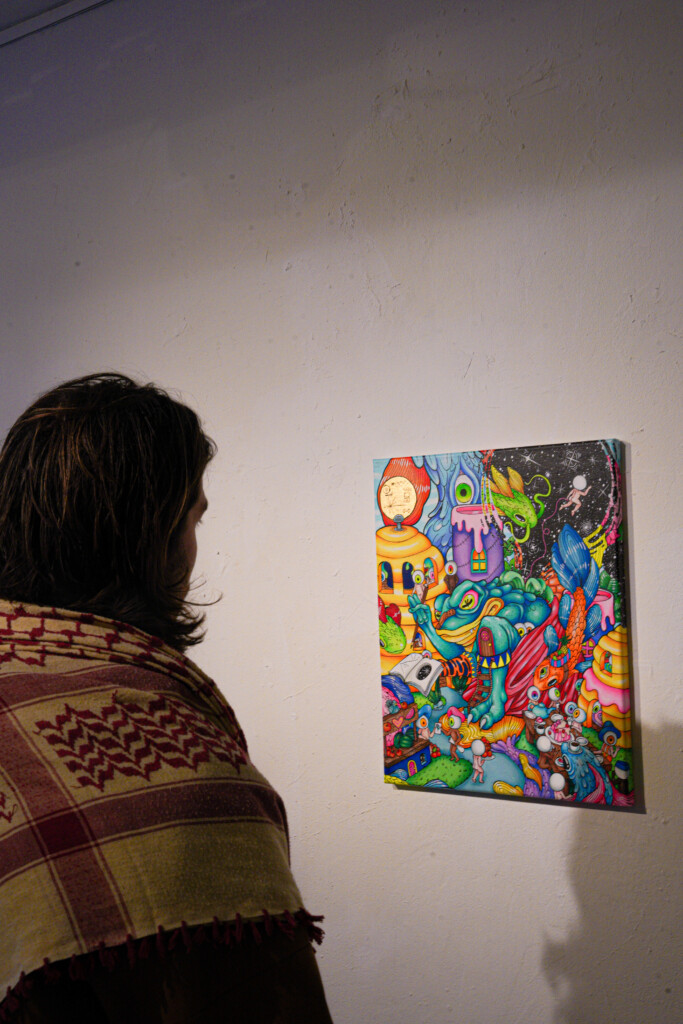
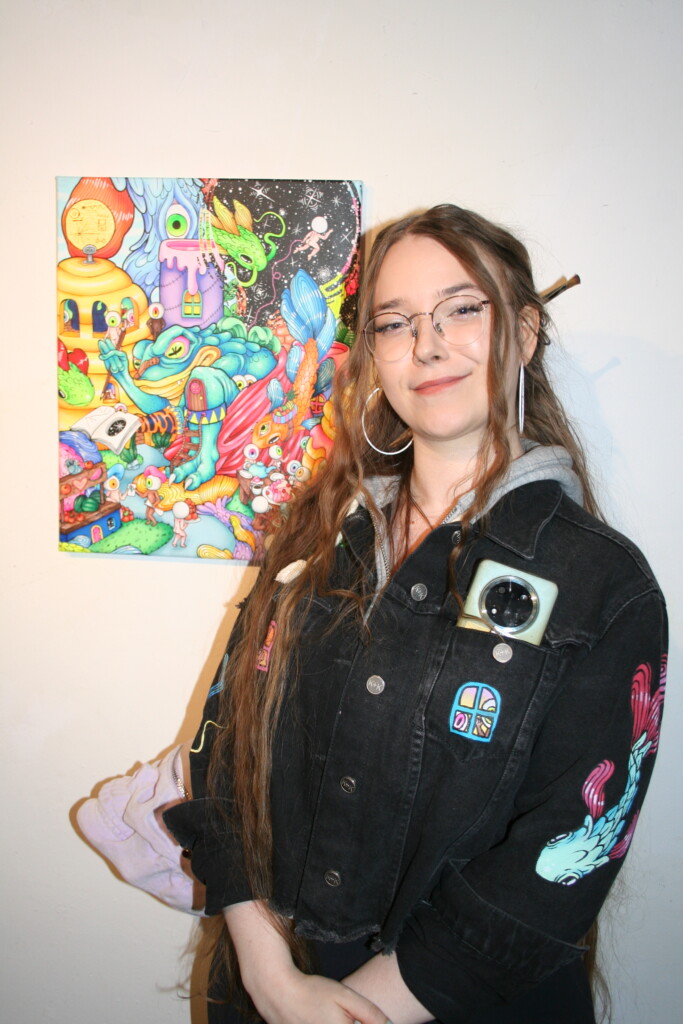 The work of Priscilla Koopman grows from an expanding inner art universe where mental health, emotional experience and vulnerability play an important role. Within this world she creates figurative work filled with creatures, characters and objects that relate to one another and reflect emotions, inner struggles and shifting mental states. These figures are not fixed characters with closed stories but evolving forms that grow alongside her own experiences and development. By combining soft colorful imagery with heavier themes, she explores how difficult subjects can be approached in a more accessible and inviting way so that intimate topics can be discussed and reflected on. Her work often balances playfulness and seriousness with the cute and grotesque to portray the duality of life. Painting is central to her practice and her process is very intuitive. She usually begins without a fixed plan and allows her work to develop organically, often not fully knowing what the final result will be. Over time the works begin to influence one another, gradually expanding this inner art universe that continues to evolve.
www.allicsirpart.com
@allicsirpart
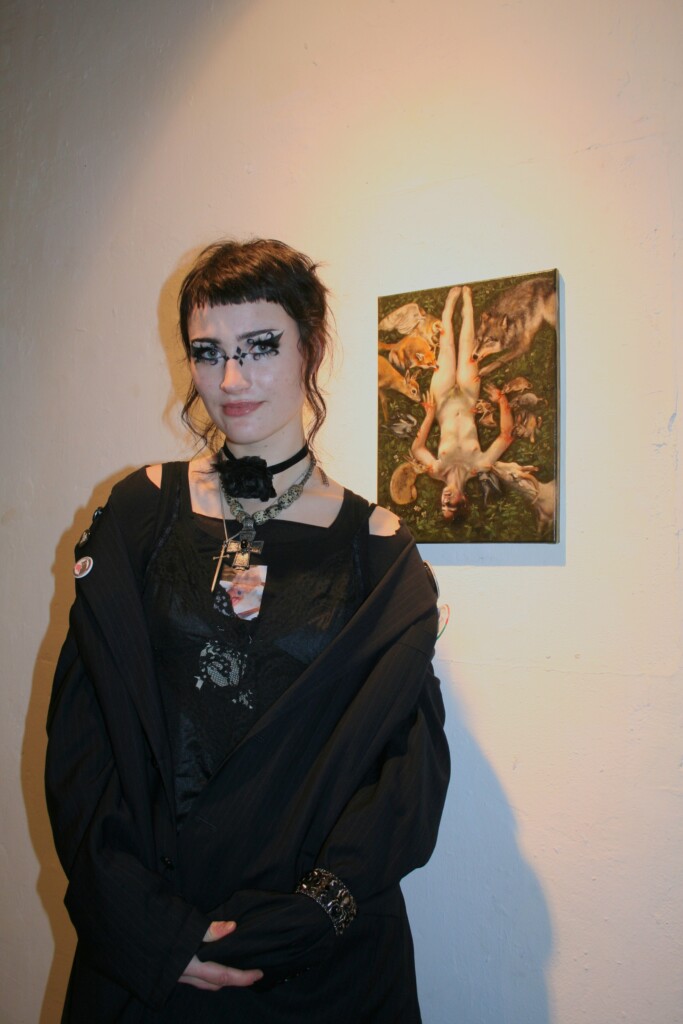
This work depicts a fantasy about dying: to give my body to all the forest animals. First come the foxes and the wolves, then the crows, then the flies and the soil creatures. It is not painful, it’s joyful, a sweet longing. It is a way of sacrificing, of giving the non-human animals all that you have: your life. It feels like the ultimate rest and peace to lie on a soft bed of moss and nettles and be slowly consumed by those who we killed on the roads and skinned for their fur. I feel guilty for my humanity, the deforestation, the taking of land, asphalting, the soccer fields devoted to livestock. If I could sacrifice myself for them, I wouldn’t have to think about it twice.
Sanne Korswagen (she/they) is an Utrecht-based artist and designer. In her daily life she is deeply involved with human- and animal rights; her activism always shows through in her work. In their work they gravitate towards the darker and more gruesome parts of being a human-animal. Themes like female rage, the male gaze, female (non-human) animals, mental health and queer and gender identity play a significant role in her work; all expressed in a fragile or rebellious way. Much of her work highlights the things most people prefer to look away from, both within themselves and in the world; she is not afraid to make people feel uncomfortable.
@sannekorswagen
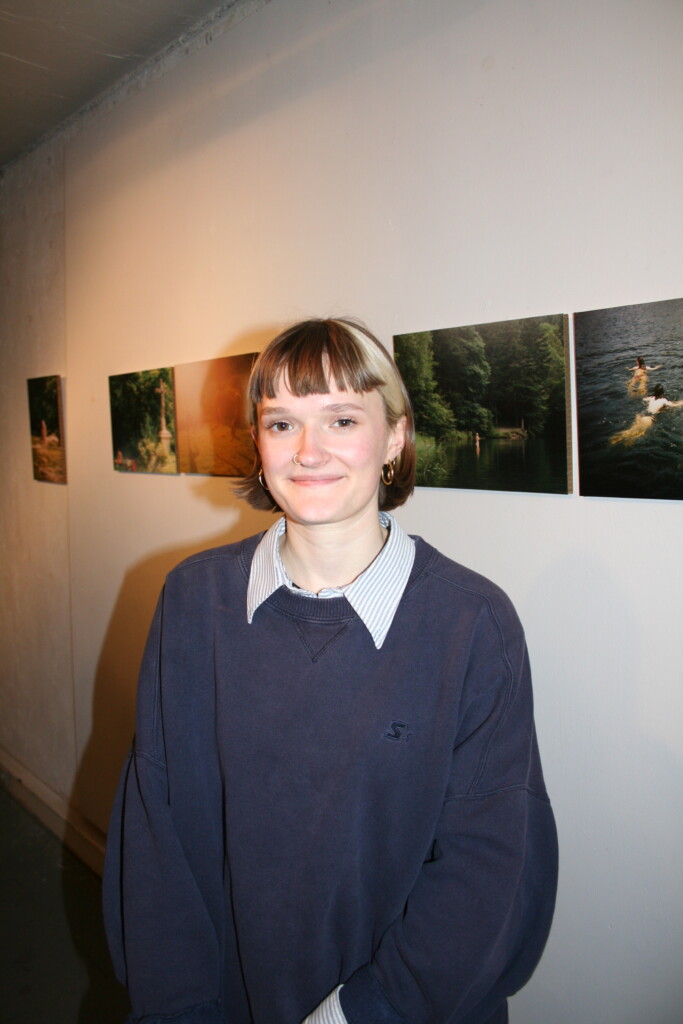
In these photos I visualize a world in which being together with each other, our community and nature is the norm. Where the empathy and softness we seem to have lost can be found everywhere around us.
When Savannah van den Roovaart looks at the world and life around her, she sees a lot of suffering caused by people and cannot help but take action. As an activist, documentary and autonomous photo- and videographer and as a human being with empathy she captures what she believe is broken within our system and those who fight it. The violence inflicted by the systems we live in is so vast that we might not know where to look anymore.
Easily feeling overwhelmed by all that demands our attention, she tends to shed light on the individual to make it personal and more tangible. She hopes to create more empathy and care for each other, our environment and ourselves and hopes to create courage and passion to fight the current systems.
www.savannahvandenroovaart.com
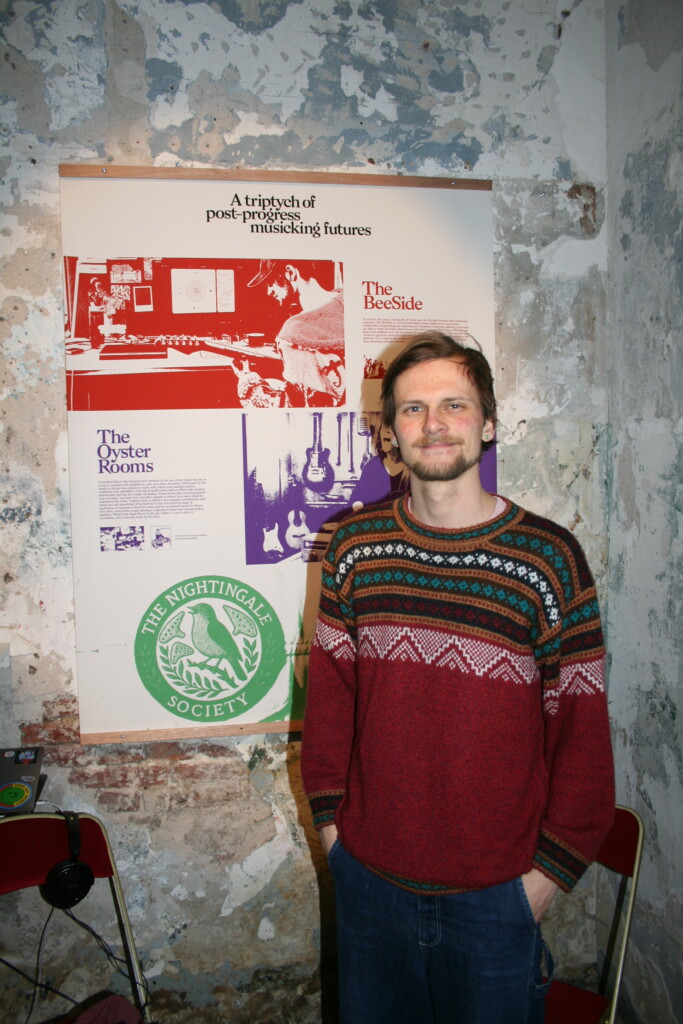 Musicking is part of a fundamentally human approach to life. Present in our day-to-day, interwoven in our history. Social and technological developments of the last two centuries have altered music, slowly corrupting it. What does musicking look like when freed from ideologies of efficiency, commoditisation, and individualism? How can we imagine musicking futures that are centred around community, mental health, and living well together? ‘A triptych of post-progress musicking futures’ is a collection of three imaginaries that propose other ways of organising musicking in society, presented in the form of an audioplay.
Want to know more about the research and design work behind this piece? Go to tomvanwijland.com/amwom.html
*Verb to describe any activity that positively contributes to musical performance, such as playing music, composing, dancing, building or maintaining an instrument, talking about music, etc.
Tom van Wijland is a designer working with participatory futuring and designing for social change. This work is part of an ongoing interest in the societal role of music as an activity that unifies and allows practitioners to find both the other, and themself. This particular work was performed as a master thesis project at the Umeå Institute of Design in Sweden.
tomvanwijland.com
This project transforms a discarded studio cabinet door into a speculative portal to a “fossil garden.” After stripping the paint to reveal the wood grain, the outer surface is hand‑drawn with sketchbook‑style pencil images of an untended garden behind a gate. The interior becomes a miniature cabinet of curiosities, housing fictional flowers imagined for this garden. Each specimen originates from research sketches, based on the memories of gardens from artists’ childhood, carved in clay and cast in plaster as “techno‑fossils” that appear both newly discovered and extinct. The original hinges remain functional, allowing the door to swing open and invite viewers to step into the imagined ecosystem. By repurposing waste into a narrative device, the work critiques capitalist “use‑and‑discard” logic, visualises a post‑capitalist world where growth‑driven economies have halted, and encourages reflection on alternative relationships with nature and future biodiversity.
Vanda Vlašič (2000) is a researcher and a multidisciplinary artist. Her practice facilitates opening portals to worlds parallel to our own, where reality twists in various ways. Using science fiction interlinked with personal mythology, she creates spaces with main focus on her sculptures which take you on journeys to not-so-distant worlds. She works with combinations of materials, found and collected objects, drawings and text.
Currently, her main focus spans botanical re-imaginations, drawing focus to the fast-paced disintegration of our natural world while using the collected knowledge to draw us closer as a community via spaces, nourishments and play.
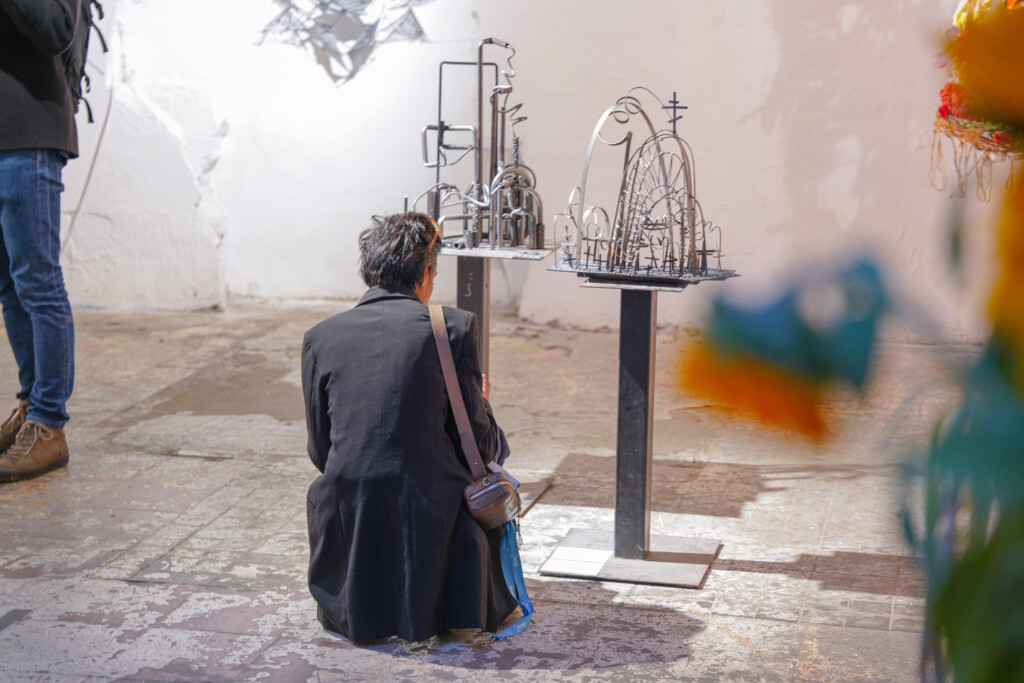
Urban Virus is an installation where metal takes on the form of dead organic matter: tangled pipes like arteries of an abandoned city, growing from a polished platform. It resembles a relic of the industrial age and a premonition of a post-apocalyptic future where machines outlive humanity.
It embodies a technological dead end a moment when progress loses direction, leaving behind a lifeless yet self-sustaining technogenic landscape. The “Urban Virus” is not destruction, but the meaningless survival of machines without purpose or intent.
Graveyard Virus is made through welding and bending steel, but the techniques are used expressively rather than functionally. Welds become textured “virus” formations, and the bent metal intertwines to form a unified architectural structure.
The installation is a continuation of the story of the «Urban Virus». What will happen after complete global industrialisation? Will there be life in this world of machines? Will it be possible to breathe this polluted air? Or will it become a large graveyard?
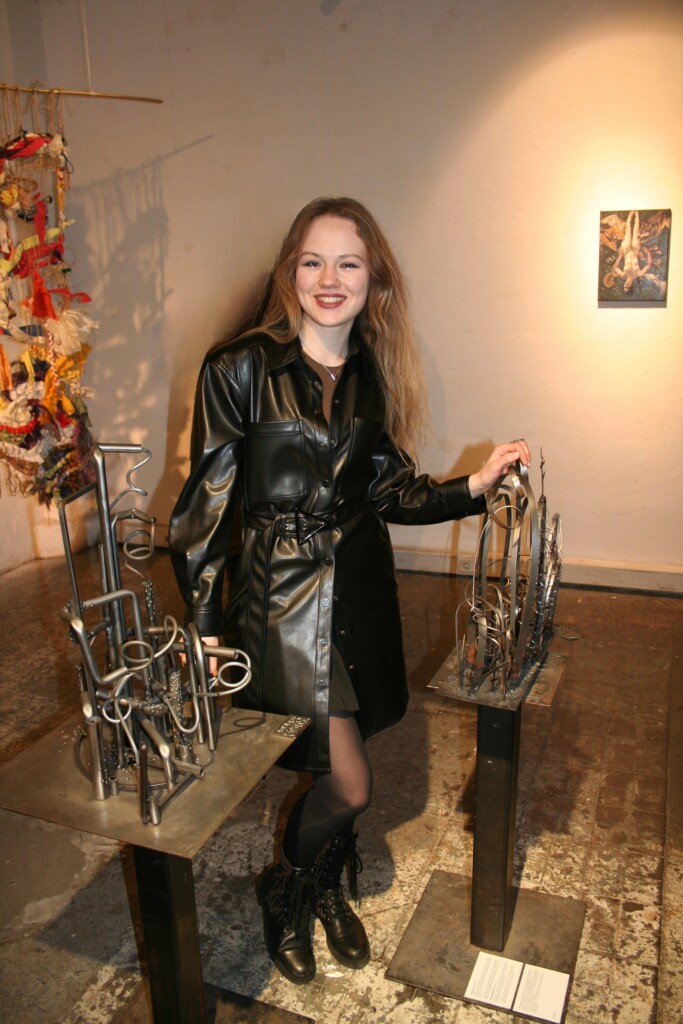
Velya Svan’s creative journey has led her through various disciplines — architecture, fine art, product and graphic design. This diverse background has shaped her style, where the precision of architecture meets the boundless flight of surrealism.
Her practice unfolds across two worlds: The first is rooted in her architectural background. Here she creates industrial installations that immerse the viewer in the harsh environment of modern industrialization. These works reflect the weight of factories, machinery, and urban structures that define our reality.
The second world is her personal safe space. It is inhabited by surreal characters and fantastical landscapes — a place of refuge she returns to whenever reality becomes an unbearable burden.
@Velya.Svan
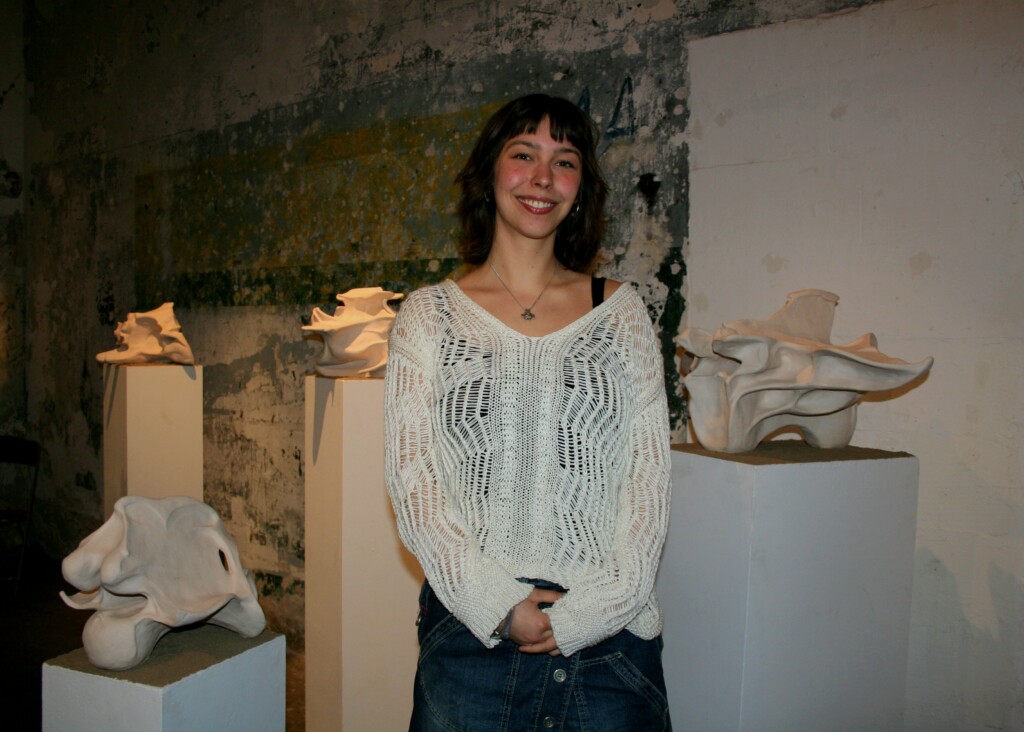
Water Wervels is a series of seven handbuilt ceramic sculptures inspired by the shapes of animal vertebrae that Yana Haaitsma collected over the years in the dunes of The Hague. These bones became the starting point for an exploration of relationships between human and more-than-human worlds, particularly in relation to marine environments.
Each sculpture functions as an individual element while also suggesting a larger body. Through the imagery of the spine, Water Wervels emphasises the ocean as a life-supporting structure: the place where life began and where everything remains connected. At the same time, the work reflects on the fragility of this system, as marine environments are increasingly strained by human activity. Drawing on ecofeminist ideas of care, interdependence and responsibility, the project explores how humans depend on the ocean while capitalist systems continue to damage it.
Yana Haaitsma (b. 2002, The Hague) is a visual artist working primarily with ceramics, sometimes in combination with metal, wood, or found objects. Her practice explores relationships between human activity, material cycles, and the more-than-human world. Growing up in a coastal city, the sea has long functioned as a site of reflection and inquiry in her work.
A sense of wonder for the natural world is central to her practice. In nature she is drawn to small details, textures, patterns and forms that often go unnoticed. She keeps a photographic archive of these observations, and many found objects end up in her studio, where they become starting points for new sculptural forms.
Currently pursuing an MA at the Oslo National Academy of the Arts, she is developing a series of sculptures made from recycled clay combined with waste recovered from the Oslofjord during clean-up dives. Integrated into the ceramic forms, these human-made remnants disrupt the clay surface, creating fractures and tensions within the material. Through these works, she reflects on the power structures that shape what is considered valuable, what is extracted and what ultimately becomes discarded.
@yanahaaitsma